
Need the tape to stick and carry current?
Ordinary tape only holds parts together. Conductive copper tape or foil adhesive tape may be asked to do more: create a conductive path, bond foil to a surface, and help control electromagnetic interference.
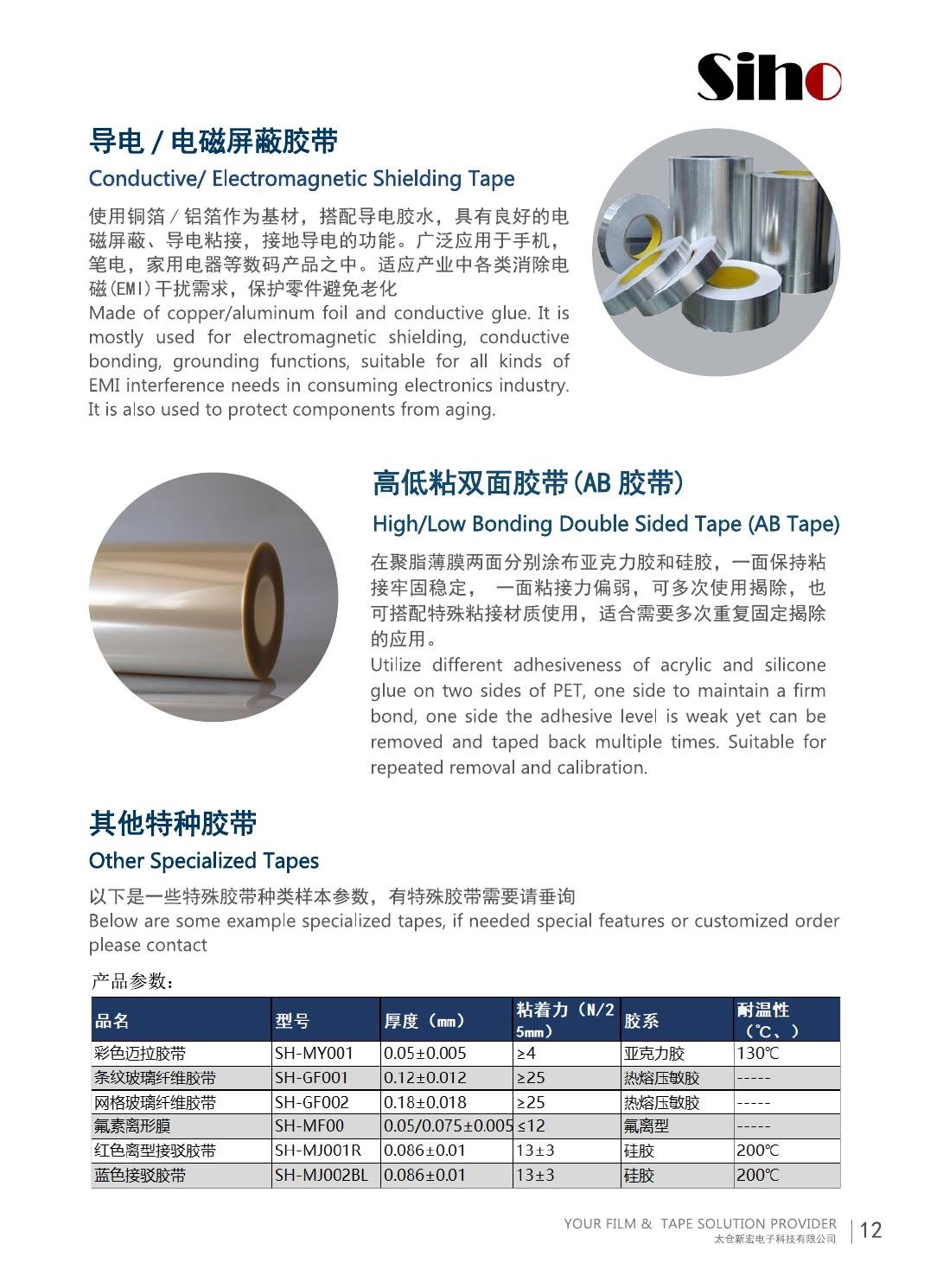
It is not only a sticky layer. It is part of the electrical path.
Four questions before we cut a sample
A shiny foil roll may look simple. The real choice sits underneath: where the current must travel, what surface it touches and how the part will be converted.
What must be shielded or grounded?
Enclosure seam, cable, electronic module, contact area or another assembly?
Copper or aluminum?
Tell us your material preference, weight or corrosion constraint. Do not choose only by appearance.
Where must current pass?
Across the foil surface only, or through the adhesive layer into the substrate?
How will it be converted?
Required thickness, roll width, slit width, die-cut shape, liner and assembly method.
We show the boundary before we show a promise
Verified from the current factory brochure
- Copper foil or aluminum foil is used as the carrier.
- The construction uses conductive adhesive.
- Stated functions include electromagnetic shielding, conductive bonding and grounding.
- The brochure positions the family for EMI-control needs in consumer electronics.
Not published here without grade-specific proof
No invented numbers: this page does not claim a shielding-effectiveness value, surface resistance, through-adhesive resistance, foil thickness, temperature rating or certification.
Send the application first. We will confirm the exact grade and the data that can be supported.
Quick answers before the sample
What is EMI shielding tape made from?
SIHO's current brochure describes copper or aluminum foil combined with conductive adhesive. Exact construction still has to be matched to a grade.
Is conductive tape the same as ordinary tape?
No. Ordinary tape may only hold. Conductive tape may also need to carry current, support grounding or help control interference.
Is conductive copper tape the same as copper foil adhesive tape?
The search names often overlap, but the decision is not made from the name alone. Confirm the foil, whether the adhesive must conduct, the electrical path, the substrate and the converting method.
Can I choose from a generic “conductive tape” name?
Not safely. First define the current path, substrate, carrier material and converting method. Then choose the grade.
Do you guarantee a resistance or shielding value?
Not without a specific grade and test method. The current brochure does not publish those figures, so this page does not invent them.
Send the part, the current path and the converting requirement.
Daodao will return with the questions the lab needs, then confirm whether this tape family is suitable.