
Your oven does not care what colour the tape is.
A green, beige or red roll can look right on the bench and still fail in the real process. Start with five facts: peak part temperature, dwell time, heat cycles, substrate and how the tape must come off.
Choose the process first. Then choose the tape.
Not one “high-temperature tape”—five different heat levels
Four production moments when the wrong tape creates rework
PCB wave soldering
Mask the area that must not receive tin or coating, then remove after the heat process.
Automotive bake paint
Tell us the real bake temperature, dwell time, surface and paint system.
Anodizing & electroplating
Heat is only one condition; bath chemistry, immersion time and edge sealing also matter.
High-temperature coating
Powder, spray or another process? The coating, pressure and removal target change the choice.
What this page can—and cannot—promise
Supported by the current SIHO brochure
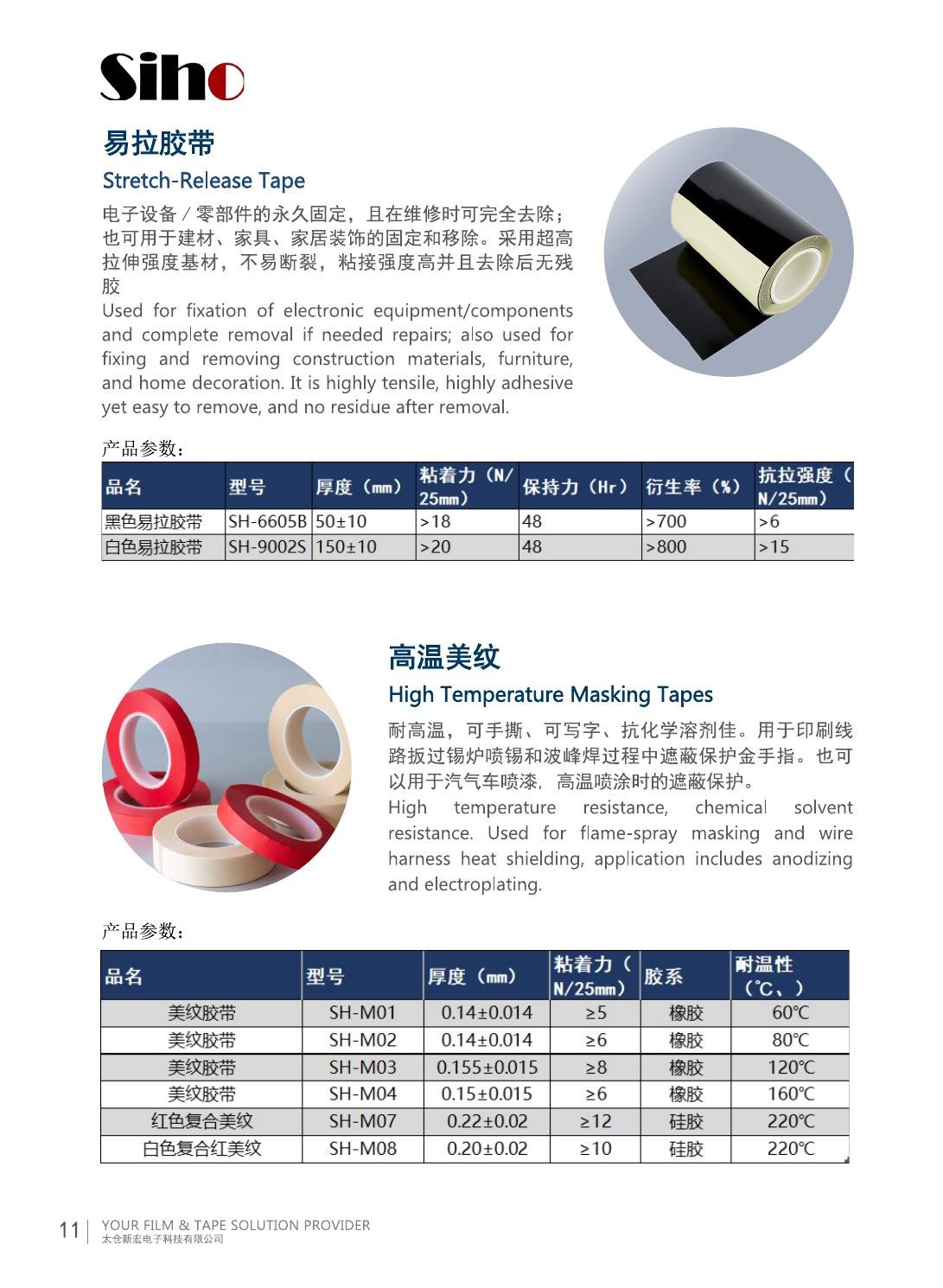
- Hand-tearable, writable and described as resistant to chemical solvents.
- Applications include PCB wave soldering and tin-spray gold-finger masking, automotive bake painting and high-temperature coating.
- The English brochure also lists anodizing, electroplating, flame-spray masking and wire-harness heat shielding.
- Specific crepe and composite-crepe constructions are listed from 60°C to 220°C.
The 220°C label is not a magic passport
Only SH-M07 and SH-M08 carry 220°C in the current table. This page does not claim that every grade survives 220°C, every bath chemistry, every dwell time or every number of cycles.
Final selection requires a real-part test. UL approval, dielectric performance, OEM approval and exact clean-removal duration are not claimed without grade-specific evidence.
Send three things before we cut the roll
Peak part temperature, dwell time, number of cycles and cooling/removal point.
Metal, PCB, coating, chemical bath, pressure, abrasion or solvent contact.
Roll width, die-cut drawing, masked area, liner and removal result.
Quick answers before the sample
Which tape is suitable for powder coating?
Start with oven temperature, dwell time, surface, coating system and clean-removal target. The colour alone is not enough to select a grade.
Can it mask a PCB during wave soldering?
The SIHO brochure lists PCB wave soldering and tin-spray gold-finger shielding. Send the soldering profile and masked area so the grade can be checked.
Is 220°C available?
The current brochure table lists 220°C for SH-M07 and SH-M08 composite-crepe constructions. It is not a blanket value for the whole family.
Can it be used in an anodizing bath?
The brochure lists anodizing and electroplating applications, but bath chemistry and immersion conditions vary. Confirm them and test the actual part before production.
Send the temperature profile, surface and masking drawing.
Daodao will turn them into a grade-specific sample question the factory can answer.