
One side stays. One side needs another chance.
For repeat fixing and calibration, “strong” is only half the job. The permanent side must hold the part, while the removable side must lift from the real surface without turning adjustment into rework.
Four questions before we call it “removable”
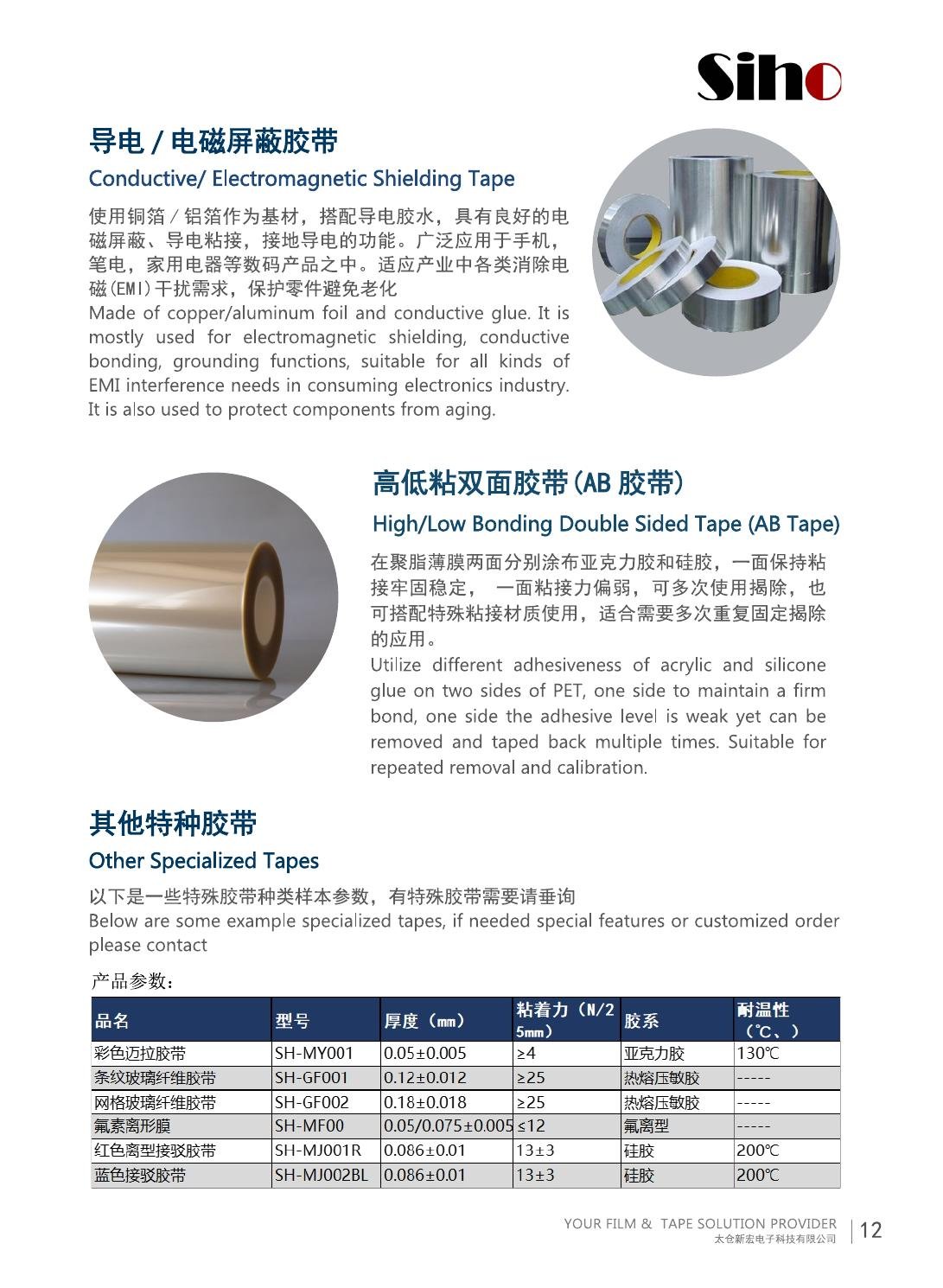
The SIHO brochure shows a differential adhesive construction
What the brochure supports
- PET film is coated with acrylic adhesive on one side and silicone adhesive on the other.
- One side maintains a firm, stable bond.
- The weaker side can be removed and taped back multiple times.
- The stated use is repeated fixing, removal and calibration, including special bonding materials subject to confirmation.
What this page does not invent
This is not automatically a stretch-release, heat-release or UV-release tape.
- No universal cleanroom, optical, medical or semiconductor grade is claimed.
- No blanket “zero residue on every surface” promise is made.
- No battery, display, FPC or automotive approval is claimed without the matching grade and test evidence.
Three moments when a two-strength tape can reduce rework
Repeat alignment
A component needs to be positioned, checked and corrected before the final process step.
Temporary fixing
One side anchors to a carrier or fixture while the other side must later release from the workpiece.
Converted adhesive parts
Roll width, liner, die-cut shape and orientation must keep the strong and weak sides clear in production.
Tell us exactly what each face touches
Material and surface finish.
Material, coating and sensitivity.
How long it stays bonded.
How many lift-and-reapply actions.
Width, thickness, liner or die-cut drawing.
Quick answers before the sample
What is differential adhesive tape?
It is a double-sided construction in which the two adhesive faces have different bonding behaviour. In this SIHO brochure construction, acrylic and silicone adhesives are used on opposite sides of a PET carrier.
Will it remove cleanly from every surface?
No universal promise is safe. Surface chemistry, pressure, dwell time, temperature and contamination all affect removal. Test the real substrate.
Can it be die cut?
PET film is commonly converted, but liner, tolerance, shape, winding direction and release behaviour must be confirmed for the chosen construction.
Is this the same as removable mounting tape?
It may serve some temporary mounting jobs, but the correct tape depends on load, surfaces, dwell time and removal method. “Removable” alone does not define the construction.
Send the two surfaces and the removal cycle.
Daodao will turn them into a sample question the factory can answer—without pretending every surface behaves the same.